Foraging for books (and other lost pleasures)
or Why I visit the same shelves every week, and you should too
No matter where you live, try to find a good used book store you can visit on the regular.
It doesn't have to be large, it doesn't have to be a hole in the wall, and you don't have to be a bookworm. Just look for a place you can go to a couple times each month, preferably one with a prominent sign that says "we buy books." This ensures the inventory is a living entity, shifting with whatever attic finds locals bring in.
Go there this week. Walk the shelves to get an idea of where your favorite topics are kept. Take note of categories that aren't your main bag but seem interesting enough that if they were the only shelves in the shop, you'd shrug and have a browse. Look at endcaps, spinning racks, floating tables, and any books that happen to be piled or stacked on the floor. (The latter isn't in every used book store, but when it is, you're in for a treat.)
Go here and just look. Don't feel bad if you don't buy anything on your first visit. Or your second or third. Book stores are meant for browsing and browsing repeatedly. You will eventually find something that tackles your attention so hard you can't set the book down, but that can take time. Meanwhile, relish each exploration.
In fact, come up with a walking routine to take each time you enter the store. Make a beeline to your favorite genre or circle the shop clockwise. Make exceptions when a section is crowded with lookers or you spot something interesting elsewhere. Whatever feels right is right. And have enough courage to completely abandon this routine, too. You're not a robot on rails, you're a mammal foraging in the forest.
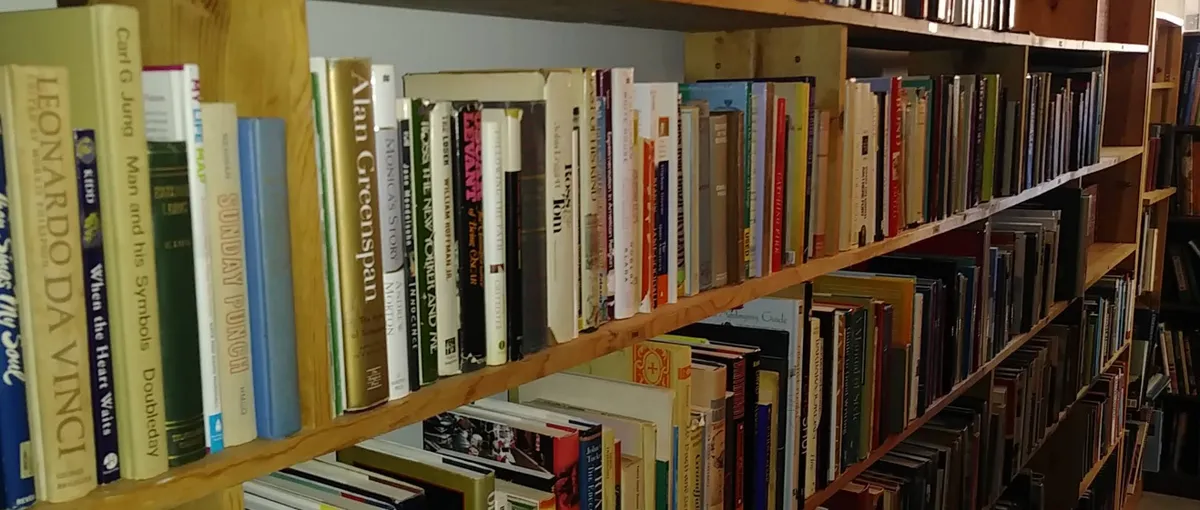
Which books do you buy? Any that reach out to you. Keep a mental list of some of prized titles and check for them each time you go in. Let your attention flick around the stacks as you browse. You'll soon realize that some part of your brain will be drawn to things without informing you as such. Trust that instinct and unshelf those books immediately, as that's where you'll strike gold.
And please, set aside thoughts of "I could get the ebook version for less" or "If I really wanted that book I could order it online." Yeah, you could, but if you do either of those you're missing the point of these trips, and you might be missing the point of life.
One book that sat on my wishlist for over a year was Spenser's The Faerie Queene. It wasn't a must-read-now book, but I wanted to find a nice old copy to mush through. Every week I went to the book store, every week I looked for Spenser, and every week I found nothing. Until the week I did---a two volume set in the miscellaneous 'old books' section, cloth bound, over 100 years old, and roughly B6 dimensions (my favorite). The feeling of finding these books after a long quest is unmatched.
But finding what you're looking for isn't even the point of these trips. The real purpose is discovering new books that delight you and open new topics to think about. You naturally start doing this if you follow the plan above, as there's something about the repetition and the regular inability to find wishlist items that causes your mind to relax and consider other options. When you aren't so focused on a goal (but you have enough of one to motivate you), you can take in the scenery as you browse.
These 'new' books are almost always at the periphery of your attention. They catch your eye because of the spine's color or they're a little shorter than the other books, even though they're way over in the starchy Education section where you rarely go. You stop, you look, that quiet part of your mind points one out, you read a few pages, and you go "...huh." That muffled sound is the seed of a revelation.
Buy those books. Take them home and devour them. They usually turn out to be honestly engaging, even if the books themselves aren't well-known, well-written, or objectively interesting.
But that's the point, isn't? Of these explorations. You want to find things that matter to you, and 'mattering' is unmeasurable. And even if you don't connect with the book that day, keep it on the shelf and check on it from time to time. One day the title might jump out at you, and it will end up being exactly what you needed. There's a reason the quiet part of your brain identified with it, after all.
Setting this kind of ritual is all about infusing your life with wonder, serendipity, and discovery. These sensations are gone in modern days, covered by spreadsheets and schedules and calls to turn every side interest into a for-profit venture. Stop all of that nonsense and pick up an old book you're halfway interested in. Read it. See what you think.